A SEACOAST DERMATOLOGY ARTICLE
Is Your Heating System Drying Out Your Skin? A New England Guide to Home Heat, Dry Skin & Eczema
Every fall, the same thing happens in homes across New Hampshire. The heat comes on, and within a week or two, skin starts to feel tight, itchy, and rough. For people with eczema, it’s often the start of a flare that lasts until spring.
Cold weather gets most of the blame, but for most of us the bigger problem is indoors. New Englanders spend the majority of the winter inside heated homes, offices, and cars. The way you heat those spaces has a real effect on your skin.
At Seacoast Dermatology, we see this every heating season in Portsmouth, Dover, Exeter, and Bedford. Here’s what your heating system is doing to your skin, and how to stay warm without the itch.
Why Heated Air Is So Hard on Skin
Cold air can’t hold much moisture. When your heating system warms that air up to room temperature, the amount of water in it stays the same, but its relative humidity plummets. On a cold January day, indoor humidity in a heated New Hampshire home can drop to 10–20%. That’s drier than much of the Sahara.
Your skin’s outer layer, the skin barrier, depends on water and natural oils to stay sealed. In very dry air, moisture evaporates out of your skin faster than your body can replace it. The barrier develops tiny cracks, irritants and allergens slip in, and nerve endings start sending itch signals. In people with eczema (atopic dermatitis), whose barrier is already weaker, this happens faster and more severely.
Not All Heat Is Equal: How Common New England Heating Systems Affect Your Skin
New Hampshire homes use a wider mix of heating than almost anywhere in the country. Here’s how each one tends to affect your skin.
- Forced-air furnaces (oil, gas, or propane). These heat quickly and dry the air quickly. They also blow dust, pet dander, and other allergens through the ductwork and around the house, which can worsen eczema and allergic skin.
- Heat pumps and ductless mini-splits. These have become very popular in New Hampshire in recent years. They’re efficient, but they still dry the air, and wall units blow a steady stream of warm air into the room. Avoid sitting or sleeping directly in the airflow.
- Wood and pellet stoves. They create intense, very dry heat, along with fine ash and smoke particles that can irritate sensitive skin. They’re common from the seacoast to the Merrimack Valley, and are one of the most drying heat sources we see.
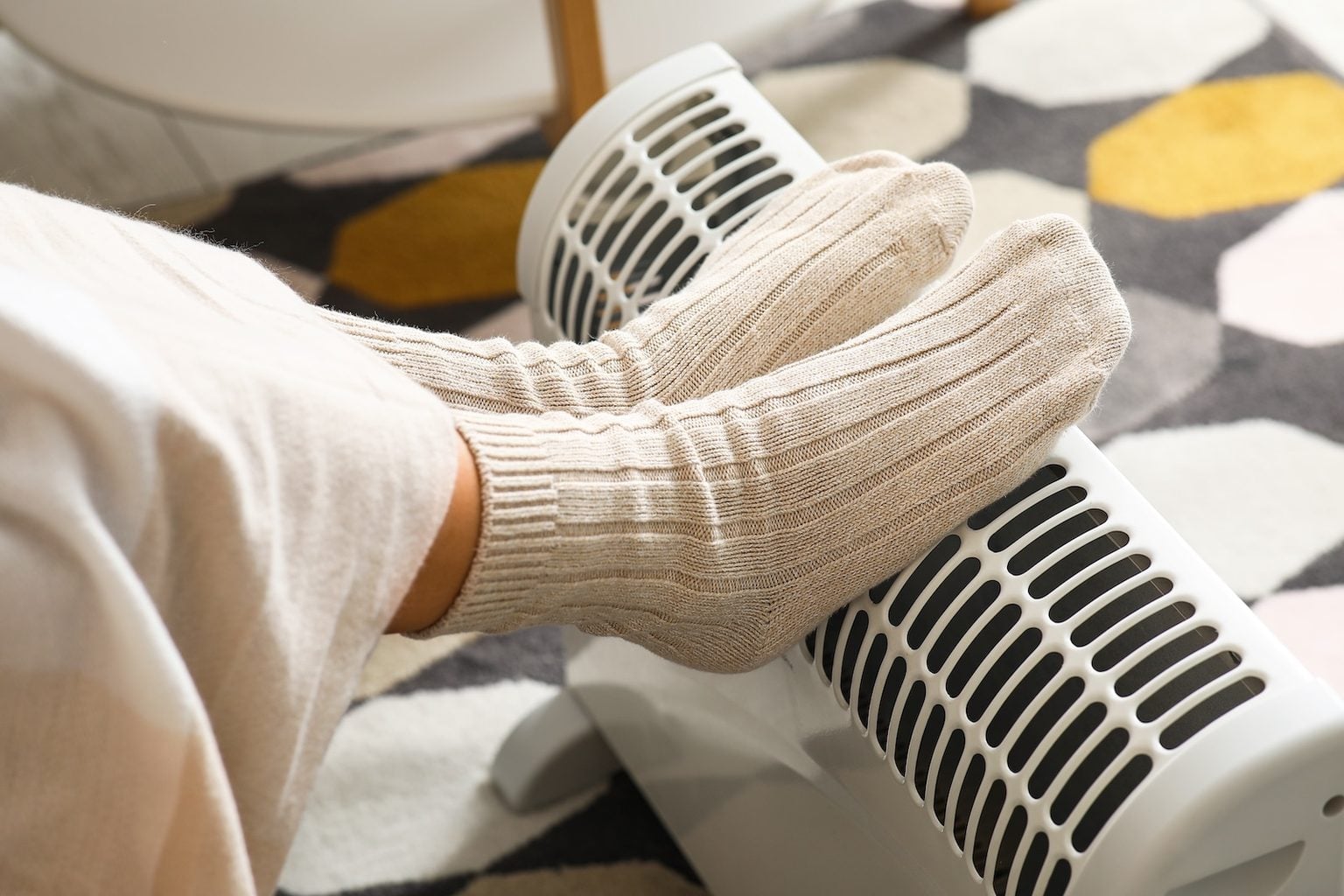
- Space heaters. They create a hot, dry zone right next to your skin. Used for hours at a time, close to the legs, they can cause a skin condition called toasted skin syndrome (see below).
- Hot-water baseboard and radiators (boilers). These are usually gentler, because they don’t blow air around. The air still gets dry, though, and radiators can overheat bedrooms.
- Electric baseboard heat. This is common in older homes, apartments, and additions. It dries the air but doesn’t circulate dust.
- Radiant floor heat. This is the gentlest option for skin, because it warms surfaces rather than blowing air.
Whatever system you have, the fix is the same: put moisture back into the air, and keep your skin from sitting right next to the heat source.
Toasted Skin Syndrome: The Heating Rash Most People Have Never Heard Of
Erythema ab igne, also called toasted skin syndrome, is a rash caused by repeated exposure to heat that’s warm but not hot enough to burn. It shows up as a lacy, net-like pattern of red or brown discoloration, usually on the shins, thighs, lower back, or abdomen.
In New England, the usual causes are:
- Sitting close to a wood stove, pellet stove, or space heater every evening
- Long hours on heated car seats during a winter commute
- Heating pads or hot water bottles used for back or joint pain
- Resting a laptop on your legs
Caught early, it usually fades once the heat source is removed, though that can take months. With years of exposure, the discoloration can become permanent. In rare cases, long-standing toasted skin has been linked to skin cancer. If you notice a mottled, net-like pattern on your skin, move away from the heat source and have a dermatologist take a look.
Dust, Dander, and Your Ductwork
Forced-air systems recirculate everything in your home’s air, including dust mites, pet dander, and pollen that came in over the summer and fall. For people with eczema or allergic skin, these can trigger flares on top of the dryness.
- Change your furnace filter regularly, following the manufacturer’s schedule. That’s typically every one to three months during heating season.
- Ask your HVAC technician about the highest-rated filter your system can handle.
- Vacuum floors and vents often, ideally with a HEPA vacuum.
- Wash bedding weekly in hot water, with a fragrance-free detergent.
If you get a rash that lines up with heating season and moisturizing doesn’t solve it, an allergy may be part of the picture. Dr. Jonathan S. Glass has special expertise in allergic contact dermatitis. He previously directed the contact dermatitis clinic at Dartmouth Health, and offers patch testing to pinpoint exactly what your skin is reacting to.
How to Heat Your Home Without Drying Out Your Skin
- Measure your humidity. An inexpensive hygrometer, available at any hardware store, tells you what’s really going on. Many people are surprised how low their numbers are.
- Aim for 30–50% indoor humidity. Below 30%, skin dries out. Above 50%, you risk condensation, mold, and more dust mites, which can make eczema worse.
- Use a humidifier where you sleep. You spend about a third of your day in your bedroom. A cool-mist humidifier there makes the biggest difference. Use distilled water, and clean it as directed to prevent mold and bacteria. A whole-house humidifier attached to your furnace is another option.
- Turn the thermostat down a few degrees. Every degree cooler means slightly less drying, and a cooler bedroom also helps itchy skin at night.
- Don’t sit right next to the heat. Keep a few feet between your skin and wood stoves, space heaters, and mini-split airflow.
- Turn down the heated seats. Use them to warm up, then switch them off, and point car vents away from your face and hands.
- Keep showers short and lukewarm. A hot shower followed by a warm, dry house is one of the most common flare triggers we see. Moisturize within three minutes of drying off.
- Switch to a thicker moisturizer for heating season. Creams and ointments with ceramides, glycerin, or petrolatum work better than lotions.
Who’s Most at Risk
Anyone can get dry, itchy skin from indoor heat, but some people feel it much more:
- People with eczema or psoriasis
- Babies and young children, whose skin barrier is still developing
- Older adults, whose skin produces less oil
- Healthcare workers and others who wash their hands frequently in heated buildings
- People with rosacea, who may flush when moving from cold air outside to hot air inside
When to See a Dermatologist
Book an appointment if itching keeps you up at night, if skin is cracked, bleeding, or oozing, if two weeks of moisturizing and humidifying hasn’t helped, or if you notice a net-like discoloration from a heat source. A dermatologist can confirm the diagnosis and prescribe treatments that aren’t available over the counter.
Our team treats eczema and winter skin problems for patients of all ages:
- Dr. Arthur Marka, a board-certified dermatologist with a background in internal medicine, treats eczema, psoriasis, rosacea, and pediatric skin conditions.
- Dr. Jonathan S. Glass specializes in allergic and occupational contact dermatitis and patch testing, and is accepting new patients.
- Ashley Gnecco, FNP-C, a Seacoast native, cares for patients with eczema and psoriasis, including children.
- Kara Fiore, FNP-C, Siobhan Arey, MPH, PA-C, and Meghan E. Loring, PA-C all treat eczema and other common skin conditions.
More Winter Skin Reading
- Winter Skin Problems in New Hampshire: When to See a Dermatologist
- Xerosis (Severe Dry Skin) & “Winter Itch”: Why It Happens and How to Treat It
- Fall & Winter Skin Woes: How to Prevent and Treat Dry Skin and Seasonal Flares
Dermatology Care Across New Hampshire
Seacoast Dermatology has served the New Hampshire seacoast, Southern Maine, and Massachusetts’ North Shore for more than 40 years, with five offices:
- Portsmouth – Borthwick Ave: 330 Borthwick Ave, Suite 303, Portsmouth, NH 03801 · 603-431-5205
- Portsmouth – Lafayette Rd (Surgical Center): 278 Lafayette Rd, Bldg E, Portsmouth, NH 03801 · 603-431-5205
- Dover: 750 Central Ave, Suite O, Dover, NH 03820 · 603-431-5205
- Exeter (Surgical Center): 1 Hampton Rd, Building B, Suite 208, Exeter, NH 03833 · 603-431-5205
- Bedford (Mohs Surgery): 166 S River Rd, Suite 205, Bedford, NH 03110 · 603-956-6390, now open and accepting new patients
Don’t let heating season wear down your skin. Call 603-431-5205 (Bedford: 603-956-6390) or schedule an appointment online.
This article is for general information and is not a substitute for medical advice. If you have a skin concern, please talk to a dermatologist.